
Coulange military safari jacket: from colonial uniform to casual wardrobe, the legacy of the M47
Four flap pockets, epaulettes, a belt or drawstring to mark the waist: the safari jacket was born under uniform, on colonial theatres in the late 19th century, before moving on to safari, the cinema and then the catwalk. The Safari Jacket M47 by Coulange, a French house founded in 1918, claims this lineage, but also a more precise model: the French army's M47, that is to say the jacket of the toutes armes modèle 1947 uniform, worn in Indochina and then in Algeria. Cut in khaki from Japanese cotton and assembled in the brand's workshop in France, it extends a history in which a trooper's garment became a fashion piece. It is offered at €1,400.

The safari jacket, a garment born under colonial uniform
Before becoming a weekend jacket, the safari jacket was a military answer to climate. It appears at the end of the 19th century in the wardrobe of Western soldiers engaged on colonial theatres, first and foremost the British army in India. Its shape is fixed with the khaki drill uniform that the British introduced in 1900, during the Second Boer War. Everything is already there: lightweight cotton, four bellows pockets, epaulettes and a belt. This grammar has barely moved since, and it is precisely this stability that allows us to follow the safari jacket's descent, from barracks to civilian wardrobes, without ever losing the thread.
The Afrikakorps' Buschhemd, the same jacket on the other side
The model did not remain the preserve of the British. During the Second World War, the men of the Afrikakorps also wore a jacket of this type, which the German army called the Buschhemd, the ‘bush shirt’. The safari jacket thus became a garment shared by adversaries across the lines, a sign that it answered constraints stronger than national uniform traditions. This Buschhemd would leave an unexpected trace: it is the one a great Parisian couturier would cite, more than twenty years after the war, as one of the sources of his own safari jacket.
From safari to the big screen, the jacket leaves the barracks
Meanwhile, the safari jacket found a second life far from the barracks, among hunters and travellers on safari. The term safari jacket appears in the mid 1930s, and Ernest Hemingway, who speaks of bush jackets as early as 1936, does much for its popularity. Cinema takes over in the early 1950s: Gregory Peck wears it in The Snows of Kilimanjaro in 1952, Clark Gable and Ava Gardner the following year in Mogambo by John Ford. The jacket becomes the uniform of the Hollywood adventurer, then that of the secret agent when Roger Moore dons safari outfits in five James Bond films. At this stage, it has nothing regulatory left about it: it signals a temperament rather than a rank.
Yves Saint Laurent, or the shift towards fashion
The move into everyday wardrobe plays out in Paris. Yves Saint Laurent sent a safari jacket down the runway as early as 1967, then designed in 1968 a unique model for a Vogue Paris feature. Cut in cotton gabardine, his jacket openly claims its origins: the couturier said he was inspired by the Afrikakorps' equipment and by the outfits of Westerners in Africa. From 1969, the piece joined the couturier's ready-to-wear shelves on Rue de Tournon, and immediately found its audience. A photograph by Helmut Newton, showing Saint Laurent, Betty Catroux and Loulou de la Falaise wearing safari jackets in front of the shop, sealed its status as an icon. Adopted first by women, then by men, the trooper's jacket became a civilian classic.


The M47, a combat jacket before being a safari jacket
The French army's ‘M47’ refers to the jacket of the toutes armes modèle 1947 uniform, known as TTA 47. The 1944 uniforms, modelled on the British pattern, having shown their limits, the quartermaster corps drew heavily on the American M1943 uniform. For reasons of economy, the jacket exists in only 8 sizes, four chest measurements in two lengths each. In khaki cotton, sometimes brown, it closes with six buttons and combines four buttoned flap pockets, epaulettes, cuff tabs on the sleeves and an interior drawstring. Worn in Indochina and then in Algeria until 1962, it received bellows hip pockets in 1952 and switched to HBT herringbone twill in 1961, before being replaced by the S300 during the 1960s.
Coulange, a workshop house founded in 1918
The house was born in 1918, when Madame Coulange took over a manufacturing firm and had her garments made in her own workshop, in Mayenne. According to the brand, this workshop produced for fifty years the Marine nationale's deck jacket and watch overalls. Coulange also claims to have made the M47, which it presents as the French army's safari jacket. In 1975, the workshop employed 240 people, and the current patterns are said to date from that period. Relaunched in 2023 on these original patterns, the house remains vague about the date of the original model, placed sometimes in the 1950s, sometimes in the 1980s.
A Safari Jacket M47 in Japanese cotton, cut in France
The reissue takes up several codes of the regulation uniform. The outer fabric is 100% Japanese cotton, and the pocket linings are faced in cupro, a fibre the brand presents as made from recycled fibres. The cut is straight, and the interior drawstring inherited from the TTA 47 allows the waist to be adjusted, while a buttoned tab fastens the cuffs, as on the original. Several functional pockets and buttons engraved with the Coulange name complete the piece. Offered in khaki from XS to 3XL, the jacket is cut and assembled in the brand's workshop in France; the house recommends dry cleaning and repairs its pieces free of charge for life.
Is Coulange's M47 really a safari jacket?
Strictly speaking, no: the TTA 47 was a combat jacket, not a colonial garment. But it carries all the codes, from the four flap pockets to the epaulettes to the fitted waist, and Coulange embraces this by naming it the Safari Jacket. The original, meanwhile, is becoming scarce: stocks of TTA 47 ran out quickly in recent years, driven by fashion's enthusiasm, notably in certain Asian countries. Between the surplus piece, now rare, and the reissue, sold online at €1,400, the choice sets the authenticity of the regulation garment against the new production of a workshop that claims this lineage.
Coulange military safari jacket: a century of khaki uniform in a single jacket
Few garments have crossed so many worlds without changing shape. The safari jacket has dressed British, German and French soldiers, hunters, writers, actors, and then the clients of a couturier, nearly always keeping the same pockets, the same epaulettes and the same marked waist. Few pieces of military inspiration survive their original function in this way without losing their silhouette. Coulange's M47 offers a very French reading of it, rooted in a postwar regulation combat uniform rather than in the safari wardrobe, carried by a workshop that claims a long closeness to the uniforms of the Marine nationale and the French army. Whether one seeks the original in surplus stores or its reissue, wearing such a jacket means donning a work garment that history has transformed into a style garment.
More…
Saint James naval officer's peacoat: the timeless elegance of a French military garment
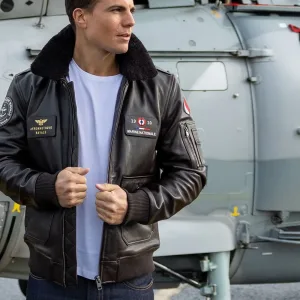
Daytona 73 leather jacket: Aéronautique navale celebrates 400 years of the French Navy
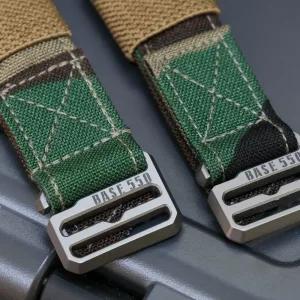
BASE 550 G.H.N. M81 Woodland: a tactical NATO watch strap in Cordura and titanium
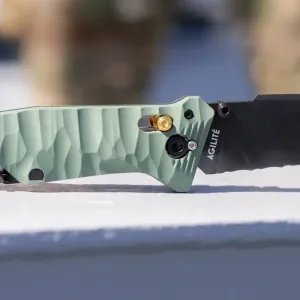
C.A.C. Commando Marine nationale: a limited-edition French military knife
Get ready for the next dive! Receive our latest news and inspiration dedicated to military and dive watches.
Subscribe
Editor: Éric Barse
Journalist, entrepreneur, and founder of the websites www.cafe-racer-only.com and www.scooter-3-roues.com, Eric Barse divides his time between his passions: motorcycles, travel, and watches. A graduate of the Saint-Cyr military academy and the 2nd RPIMA (Parachute Regiment) before pursuing a career in communications and digital media, he has a true passion for authentic watches that have accompanied his two-wheeled adventures for many years, from the Indian Ocean to Africa and Latin America!