
SAS Special Forces: history, selection, missions and watches of the legendary British Special Air Service
Few military units enjoy such a prestigious reputation as the British Special Air Service (SAS). Considered the father of modern special forces, the SAS has profoundly influenced Western military doctrines since its creation during World War II. Its rigorous selection process, discretion, and operational effectiveness have inspired the creation of elite units worldwide, including the French 1st Marine Infantry Parachute Regiment (1er RPIMa), the American Delta Force, and the Australian Special Air Service Reserve (SASR). Beyond its missions, the SAS also maintains a long-standing relationship with military watchmaking. Several iconic timepieces have accompanied its operators in theaters of operation and are now considered essential references for collectors of military watches.
The birth of the SAS during world war II
The Special Air Service was created in July 1941 by Lieutenant David Stirling. Convinced that small, mobile teams could inflict significant losses behind enemy lines, he envisioned a unit capable of operating autonomously in the North African desert. In its early days, the SAS primarily conducted sabotage operations against Afrika Korps airfields. The commandos destroyed aircraft, fuel depots, and logistical infrastructure, while avoiding direct confrontations. The results were spectacular. Within a few months, the SAS became one of the most feared units of the Axis forces.
A famous motto
The official motto of the SAS is: "Who Dares Wins." Created at the unit's inception, it perfectly encapsulates the regiment's philosophy: audacity, initiative, autonomy, and determination. Even today, this motto is adopted by many special forces units around the world.

The famous Special Air Service (SAS) badge is one of the most recognizable military emblems in the world. It consists of a winged dagger, inspired by the sword of Excalibur, symbolizing the ability of operators to intervene quickly behind enemy lines. The golden wings represent mobility, freedom of action and the ability to strike anywhere, by land, air or sea. The dagger, placed in the center of the badge, evokes courage, determination and commitment to combat. Below is the famous motto “Who Dares Wins”, imagined since the creation of the unit by David Stirling. This maxim sums up the philosophy of the SAS: take the initiative, accept risk and accomplish missions that others consider impossible. More than just a logo, this insignia has become the international symbol of modern special forces and has inspired many elite units around the world.
The organization of the SAS
The Special Air Service belongs to the UK Special Forces (UKSF). The regiment includes several operational squadrons, each composed of specialists in different fields:
- Land mobility;
- Mountain ;
- Skydiving;
- Amphibious operations;
- Special information;
- Anti-terrorism fight;
- Close protection.
Each squadron is itself divided into small patrols of four men capable of operating for several days in complete autonomy. This light organization constitutes one of the great strengths of the SAS.
The missions of the SAS
For more than 80 years, the missions entrusted to the SAS have evolved considerably. Today, operators can operate in a wide variety of areas:
- Strategic reconnaissance;
- Direct action;
- Sabotage;
- Counter-terrorism;
- Release of hostages;
- Protection of personalities;
- Human intelligence;
- Capture of high value targets;
- Military assistance to allied armies.
The SAS regularly operates alongside other UK Special Forces units, notably the Special Boat Service (SBS).
A selection among the most demanding in the world
SAS selection is renowned as one of the most difficult in the Western armed forces. It is open to experienced soldiers from different British units. The process includes several phases.
Walks in the Brecon Beacons
The first stage takes place in the Welsh mountains. Candidates must complete long, timed walks alone with a loaded pack that may exceed 25 kg. The final event, nicknamed "Endurance", requires a course of more than 60 kilometers over rough terrain in a limited time. This phase eliminates a large majority of candidates.
Jungle training
The survivors continue their training in a particularly demanding tropical environment. This phase assesses:
- Physical resistance;
- Navigation;
- Survival;
- The ability to work in a team.
The climatic conditions make the exercise extremely demanding.


Escape and Resistance to Interrogation
The final stage is probably the most famous. After several days on the run, the voluntarily captured candidates undergo a simulated interrogation under strict control. This phase aims to assess their psychological resilience and their ability to retain sensitive information. Each year, only a small proportion of candidates are awarded the famous beige beret of the SAS.
Most Famous Operations
The SAS has distinguished itself in numerous conflicts. Among the best-known operations are:
- The desert raids in North Africa during World War II;
- The Falklands War;
- The Gulf War;
- Operations in Iraq;
- Interventions in Afghanistan;
- Numerous counter-terrorism missions conducted in the United Kingdom and abroad.
Discretion remains a key characteristic of the regiment, however, with many operations remaining classified.
SAS military watches
Like all operational units, SAS members have used different watches over the decades. The officially issued models evolved according to the British Ministry of Defence's public procurement processes, while some operators also wore personal watches adapted to the demands of their missions.
Rolex Submariner Military (MilSub)
It's impossible to discuss the SAS without mentioning the Rolex MilSub. Several military references, notably the 5513 and 5517, were issued to various British units, including elements of the Special Forces. Their features were specific:
- "Sword" hands;
- Fully graduated bezel;
- Fixed lugs;
- Military markings;
- High legibility.
Today, these watches are among the most sought-after military Rolex watches in the world.

CWC (Cabot Watch Company)
From the 1980s onward, CWC watches gradually became the standard issue watches for the British armed forces. The SAS notably used:
- CWC G10;
- CWC Diver;
- CWC SBS Diver.
Their robustness, simplicity, and excellent legibility explain their enduring success.

Hamilton
Long before CWC became the primary supplier to the British Armed Forces, Hamilton played a significant role in equipping the UK's military. From the 1960s and especially the 1970s, the American brand, already renowned for the robustness of its military timepieces, supplied several models meeting the specifications of the Ministry of Defence (MoD). These watches were distributed to various units of the British Army, including personnel likely to join or support special forces such as the Special Air Service (SAS). They were valued for their high reliability, legibility, and mechanical simplicity—essential qualities for field operations. Among the most iconic models is the Hamilton W10, equipped with a hand-wound ETA 2750 mechanical movement. Its asymmetrical case, highly legible matte black dial, and luminous hands make it one of the most recognizable British military watches of its era. Produced between 1973 and 1976, the W10 is now highly sought after by collectors.

Personal watches
As in many special forces units, some operators also choose their own watches. Common choices include:
- Marathon GSAR;
- Sinn U1 and UX;
- Tudor Pelagos;
- Omega Seamaster;
- Garmin Tactical;
- G-Shock.
The choice depends on personal preferences, operational requirements, and missions.
British SAS Special Forces: A Legacy That Extends Far Beyond the United Kingdom
The SAS profoundly transformed the way special operations are conceived. Its organization, selection methods, and philosophy have served as a model for numerous elite units worldwide. Its influence extends far beyond the military sphere, reaching into the world of watchmaking, where the timepieces worn by its operators have become true icons. Whether Rolex MilSubs, standard-issue CWCs, or contemporary models chosen by some members of the regiment, these watches embody the same values as the SAS: reliability, robustness, and effectiveness.
The content published on Montre-Plongée-Militaire.com deals with the history of civilian and military dive watches, military watches, their users, and sometimes the units with which they are associated. References to the armed forces, special forces, commandos, or conflicts are intended solely for informational, historical, and horological purposes. They aim to document the origin and evolution of these timepieces without expressing any support, judgment, or position regarding the organizations, doctrines, or events mentioned.
More
Jacques Bianchi Marseille JB300 Black: a diving watch true to its military heritage
Wolbrook Pan4Timerautomatic: an original diver's watch designed for travelers
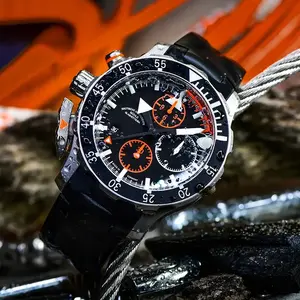
Mühle-Glashütte S.A.R. Flieger-Chronograph: a mission chronograph designed for rescue pilots
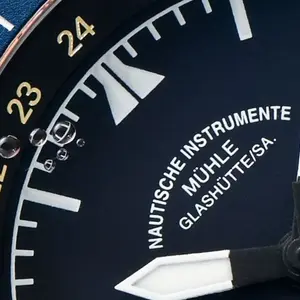
Mühle-Glashütte Seebataillon GMT: a true mission watch inspired by the needs of the German Navy
Get ready for the next dive! Receive our latest news and inspiration dedicated to military and dive watches.
Subscribe
Editor: Éric Barse
Journalist, entrepreneur, and founder of the websites www.cafe-racer-only.com and www.scooter-3-roues.com, Eric Barse divides his time between his passions: motorcycles, travel, and watches. A graduate of the Saint-Cyr military academy and the 2nd RPIMA (Parachute Regiment) before pursuing a career in communications and digital media, he has a true passion for authentic watches that have accompanied his two-wheeled adventures for many years, from the Indian Ocean to Africa and Latin America!