
REC Vulcan XH558: a watch cut from the last Vulcan bomber ever to fly
The Danish brand REC Watches has built its catalogue on a simple idea: putting a fragment of a historic machine inside its watches. Its new DNA Edition, the Vulcan XH558, incorporates a piece of the double-skin engine bay hatch from the Avro Vulcan bomber XH558, the last example of the type to have flown. The material was supplied and authenticated by the Vulcan to the Sky Trust, the charity that owns the aircraft. Behind this launch lies a richer story than the marketing copy suggests: that of an aircraft born of Britain's nuclear deterrent, returned to the skies by public subscription, then grounded in 2015. Pre-orders open on 17 November, with an expected retail price between $2,000 and $2,500.

REC Watches, horology that recycles legendary machines
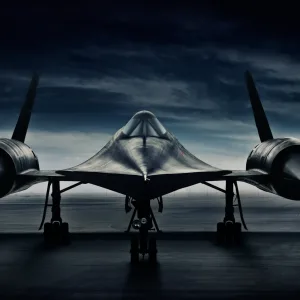
Founded in 2014 by Jonathan Kamstrup and Christian Mygh, REC Watches designs its watches in Denmark and has them manufactured in Switzerland. Its name condenses three English verbs, Recover, Recycle, Reclaim, summing up its approach: taking an authentic material from a historic machine and incorporating it into the watch. That is the principle behind the DNA Edition series, where each run depends on the quantity of material available. In aviation, the brand had already worked with titanium from SR-71 Blackbird n° 61-7956 for the HABU, then from a 1940 Spitfire Mk1a for the X4009. The Vulcan XH558 completes this trio with a bomber whose career mirrors that of the British Cold War.
The Vulcan, the delta wing of nuclear deterrence
Born at Avro from the sketches of Roy Chadwick, already the father of the Lancaster, the Vulcan first took to the air in 1952, according to REC. Three years later, at the Farnborough air show, test pilot Roly Falk performed a barrel roll with it. Entering service in 1956, the aircraft formed, alongside the Victor and the Valiant, the V-force, the backbone of Britain's strategic nuclear bombing capability. The Vulcans remained on nuclear alert until 1970, when the Royal Navy's Polaris submarines took over the deterrent role. In the meantime, the threat of surface-to-air missiles forced crews into low-altitude flying. Its only wartime campaign came late, however: in 1982, the Black Buck raids flew from Ascension Island to the Falklands, refuelled in a chain by Victor tankers. Of seven missions, five resulted in an actual attack.
XH558, from the display squadron to public subscription
XH558 belongs to the B2 version, whose wing leading edge was redesigned, and made its first flight on 25 May 1960. Withdrawn from front-line service in March 1984, it joined the RAF's Vulcan Display Flight the following year, which was disbanded after the 1992 season. Sold to private owners, it landed at Bruntingthorpe on 23 March 1993. The Vulcan to the Sky Trust then launched a subscription in 1999 that raised around £6.5 million, between public donations and Heritage Lottery funds. Restored, the aircraft flew again in 2007 under the civil registration G-VLCN.
28 October 2015, fifteen minutes for a farewell
This second career ended when BAE Systems and Rolls-Royce gave up their status as design authority, on which the flying permit depended. The final flight took off on 28 October 2015 from Doncaster Sheffield Airport, the former RAF Finningley, and lasted around fifteen minutes before a water cannon salute. Among the five crew members was Martin Withers, who had piloted the lead aircraft on the first Black Buck raid. More than 55 years after its maiden flight, XH558 also marked, according to the Trust, the last flight of an entirely British four-engine jet.


An engine bay hatch, right next to the Olympus engines
The fragment chosen by REC is no ordinary panel: it comes from the original double skin of an engine bay hatch, meaning the area that housed the Rolls-Royce Olympus engines. This engine family, later developed for Concorde, forged the Vulcan's signature sound: on the Olympus 201, the famous howl appears at around 90% thrust. These same engines also dictated the restored aircraft's appetite, each display at an airshow consuming around 2,500 litres of fuel. The brand states that the piece, too worn to remain in service, was entrusted to it, and that the aircraft was not dismantled to produce the watches. The Vulcan to the Sky Trust supplied and authenticated the material, giving the provenance a guarantee from outside the brand itself.
A design inspired by the delta wing, a spec sheet still blank
On the watch itself, REC remains sparing with details. The Vulcan XH558 is presented as a mechanical watch designed from scratch in-house, assembled using Swiss watchmaking expertise, with a design inspired by the bomber's delta silhouette. Beyond that, the model's page currently gives no diameter, no calibre, no water resistance and no case material. Enthusiasts wanting to know what kind of pilot's watch they are dealing with are left to wait for the launch. This restraint contrasts with the wealth of historical detail put forward, inviting buyers to judge the object on its own merits rather than its story.
793 pieces, a figure to take with caution
The production run raises another question. At the top of the product page, REC announces a series limited to 793 pieces. Yet its own FAQ states that the exact number remains to be determined. No explanation for the figure has been given. In a collection where the available material sets the quantity of watches, this hesitation is not absurd, but it is worth flagging for anyone buying partly for rarity's sake: 793 is the announced figure, not a guaranteed ceiling.
How to reserve the REC Vulcan XH558 at launch?
Pre-orders open on 17 November with a 48-hour launch offer, running from 17 November at 3pm CET to 19 November at 3pm CET, or until the allocated pieces sell out. It combines a special price, a warranty extended from 3 to 4 years, a 20mm camouflage canvas strap worth $95, priority delivery, a leather travel case and free worldwide shipping. In the absence of a final price, the indicative range of $2,000 to $2,500 can be read in light of other aviation DNA Editions: the HABU and the X4009 are listed at €2,095, and at €1,775 and €1,780 respectively for pre-order.
REC Vulcan XH558: a piece of the Cold War that will never fly again
Vulcan XH558 lived several lives: bomber of a nuclear deterrent force, star of airshows under RAF colours, then survivor brought back to the skies by public subscription. That last life ended not for lack of passion, but because the companies guaranteeing its airworthiness withdrew, a reminder of what it costs to keep aviation heritage flying. That a fragment of its skin should end up on a wrist says something about military-inspired watchmaking: it no longer settles for borrowing a style, it seeks out the very material of the machines that inspired it. This DNA Edition has yet to prove it is also a good watch, once its spec sheet is published and its production run fixed. At this stage, it is mainly the provenance, certified by those who brought the aircraft back into the air, that gives it its value.
More…
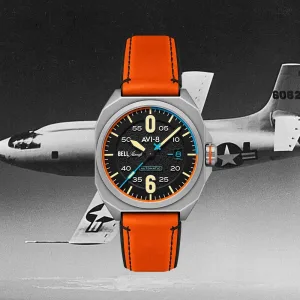
AVI-8 Bell X-1 Machbuster: from the limited Glamorous Glennis series to the production pilot's watch
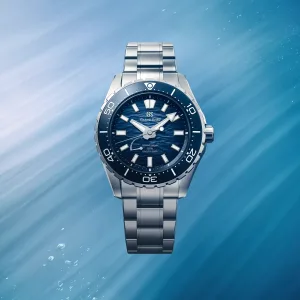
Grand Seiko Spring Drive U.F.A. Ushio 300 Diver: why the GPHG 2026 crowned a true diver sports watch of the year
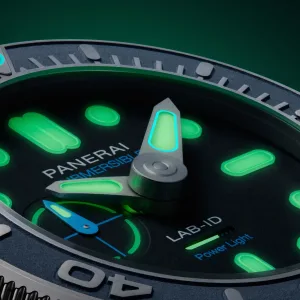
Panerai Submersible Elux LAB-ID: the return to the wrist of a light born for the Marina Militare
REC DNA Edition Habu: a watch cut from the only surviving SR-71B
Get ready for the next dive! Receive our latest news and inspiration dedicated to military and dive watches.
Subscribe
Editor: Éric Barse
Journalist, entrepreneur, and founder of the websites www.cafe-racer-only.com and www.scooter-3-roues.com, Eric Barse divides his time between his passions: motorcycles, travel, and watches. A graduate of the Saint-Cyr military academy and the 2nd RPIMA (Parachute Regiment) before pursuing a career in communications and digital media, he has a true passion for authentic watches that have accompanied his two-wheeled adventures for many years, from the Indian Ocean to Africa and Latin America!