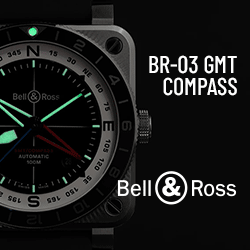

COSC certification: what does it guarantee for a diving or military watch?
On the dial of a mechanical watch, the term "Chronometer" doesn't designate an additional function. It refers to a defined level of precision and, in the case of a Swiss watch certified by the COSC, to a series of tests carried out by an independent body. For a dress watch, this precision is already a technical advantage. On a diving or military watch, it takes on an additional dimension: these timepieces have historically claimed the status of instruments, designed to provide reliable time information in environments where reading the time can be operationally important. But beware of a common misconception: a COSC certification does not certify a watch's water resistance, shock resistance, or military capabilities. It primarily concerns its chronometric performance.

What does COSC mean?
COSC stands for Official Swiss Chronometer Testing Institute. The organization was founded in 1973 by five Swiss watchmaking cantons—Bern, Geneva, Neuchâtel, Solothurn, and Vaud—along with the Federation of the Swiss Watch Industry. Its mission includes verifying the chronometric performance of movements entrusted to it and awarding the official chronometer certification when they meet the required criteria. The term "chronometer" should therefore not be confused with "chronograph." A chronograph measures time using a start, stop, and reset function. A chronometer is a timekeeping instrument whose precision performance meets specific criteria. A watch can be a chronograph without being a chronometer, a chronometer without a chronograph, or both.
How does a watch obtain COSC certification?
For traditional mechanical movements, the protocol is based on the international standard ISO 3159 for wrist chronometers with a balance wheel and hairspring. The testing doesn't simply involve measuring the time for a few days on a watch lying flat. The movement undergoes 15 days of testing, in five positions and at three different temperatures. The goal is, in particular, to determine if its accuracy remains sufficiently consistent under changing conditions. For a mechanical movement meeting traditional certification criteria, one of the best-known figures is its average daily rate: it must be between -4 and +6 seconds per day. But the protocol isn't limited to this single value. It also measures various rate variations and the movement's behavior in response to changes in position and temperature. In other words, a watch that gains only three seconds per day in a given position is not automatically a certified chronometer.
Why test multiple positions?
A mechanical watch is never perfectly still when worn. Dial facing up, crown facing down, or watch positioned vertically: gravity exerts its influence on the movement's components and can lead to variations in accuracy. This phenomenon is particularly relevant for a military or tool watch. Its owner may walk, run, drive, handle equipment, or remain in a specific position for extended periods. The five-position test aims precisely to evaluate the regularity of the movement in different orientations. Certification obviously does not guarantee that the watch will maintain exactly the same accuracy in every real-world situation. However, it does provide a standardized measurement of the movement's performance.
Why test at different temperatures?
Temperature can also influence the operation of a mechanical movement. Therefore, tests are conducted at three temperatures. The ISO protocol cited by the Geneva Chronometric Observatory uses 8°C, 23°C, and 38°C. For a watch intended for outdoor use, this parameter is clearly important. A diving or military watch may encounter significantly different thermal environments than a watch primarily worn in an office. However, it's important to be clear: COSC certification is not a military test under extreme conditions. It measures chronometric performance according to a defined protocol.
What are the advantages for a dive watch?
To understand the benefits of COSC certification for a dive watch, we need to look back at the historical function of this instrument. Before the widespread adoption of dive computers, the watch and its rotating bezel allowed divers to track their underwater time. The accuracy of the timekeeping was therefore directly related to the instrument's functionality. A COSC-certified mechanical watch provides an additional guarantee of the movement's precision. However, simply being COSC-certified does not make it a dive watch.


COSC and ISO 6425: two very different concepts
The distinction is fundamental. The ISO 6425:2018 standard specifically concerns diving watches. It defines requirements and test methods applicable to watches designed to withstand immersion to a depth of at least 100 meters and equipped with a secure system for indicating dive time, visible in the dark. COSC, on the other hand, concerns chronometric performance. A watch can therefore have a COSC-certified movement without being a diving watch. Conversely, an excellent mechanical diver's watch can meet the specific requirements of its intended use without having a COSC-certified movement. The two concepts are complementary when combined, but they are not interchangeable.
COSC and Water Resistance: no equivalence
Another misconception is that COSC certification guarantees water resistance. This is not the case. A certified movement can be installed in a watch water-resistant to 30 meters as well as in a diver's watch designed for much deeper dives. Water resistance depends on the watch's design and testing, not solely on COSC chronometric testing. Therefore, for a diver's watch, chronometric certification and water resistance characteristics must be examined separately. The same caution applies to magnetic resistance, shock resistance, and power reserve: the traditional COSC certification is not a comprehensive assessment of all the watch's performance characteristics.
What is its relevance for a military watch?
In the military world, timekeeping has historically held particular importance. Synchronization between multiple personnel, navigation, coordinated operations, or measuring duration: long before the advent of modern digital systems, the mechanical watch was a true personal instrument. High accuracy is therefore consistent with the philosophy of a mechanical military watch. COSC certification adds an objective element: the movement is not simply advertised as "accurate" by its manufacturer. It has met an independent chronometric protocol. For a collector of military or professional watches, this difference can be significant. It allows them to distinguish between a marketing claim and performance that has been subjected to standardized measurements.
A particularly valuable consistency for a tool watch
The value of COSC certification doesn't lie solely in the well-known figure of -4/+6 seconds per day. The certification also assesses consistency. This is important for a mechanical watch. A movement that consistently gains a few seconds per day exhibits predictable behavior. A movement that gains a considerable amount of time in one position and loses a lot in another is less consistent, even if its final average may seem acceptable. The criteria associated with ISO 3159 therefore take into account several parameters, including the average rate variation, the differences between positions, and the influence of temperature. This notion of stability is particularly consistent with the philosophy of a professional instrument.
Does COSC certification mean that the entire watch is tested?
This is where another nuance becomes important. In its traditional approach, the COSC certifies the movement according to its established protocol. This distinction explains why some manufacturers then add their own checks once the caliber is cased. Rolex, for example, submits its movements to the COSC before performing its own checks on the finished watch as part of its Superlative Chronometer designation. Similarly, METAS's Master Chronometer certification applies to the complete watch and covers a broader scope, including chronometric performance, water resistance, resistance to magnetic fields, and power reserve. It is therefore essential to always examine what is actually certified, rather than considering all chronometric labels as equivalent.
Magnetism, an important issue for military watches
This question is particularly relevant for a contemporary military watch. Magnetic fields generated by various equipment can disrupt a mechanical movement, especially at the balance spring. However, traditional COSC certification alone does not guarantee anti-magnetic resistance. For a user exposed to strong magnetic fields, a watch combining chronometric precision and specific protection against magnetism can therefore be of greater interest. This is one of the key differences with METAS's Master Chronometer protocol, which explicitly includes resistance to magnetic fields in its certification scope.
COSC does not mean "indestructible"
The presence of the word "Chronometer" on the dial should never lead one to attribute properties to the watch that it does not possess. A COSC-certified watch is not necessarily a military watch, nor is it automatically a professional diver's watch. Certification alone does not guarantee:
- The watch's water resistance;
- Its shock resistance;
- Its resistance to strong magnetic fields;
- Its legibility underwater;
- Its suitability for military use;
- Its compliance with the specific requirements of a dive watch.
Above all, it guarantees that the chronometric device in question has met the applicable criteria to obtain the chronometer designation. The COSC's general conditions specify that only successful completion of the corresponding tests entitles the watch to this designation.
A certification particularly well-suited to a military diver's watch
So why look for a COSC-certified dive watch or military watch? Because the qualities can complement each other. A well-designed tool watch can offer water resistance, legibility, a secure dive bezel, and robust construction. A chronometer-certified movement adds independently verified chronometric performance to this package. In the context of a mechanical watch, this is a particularly well-balanced combination: withstanding the environment while maintaining controlled timekeeping. For contemporary use, electronic equipment and dive computers have obviously changed the role of the mechanical watch. But for the professional watch enthusiast, certification remains a tangible way to assess the quality of a caliber's regulation.
COSC Certification: a selection criterion, but not the only one
When purchasing a dive watch or a military watch, COSC certification can be a relevant selling point, provided you fully understand what it means. It attests to a controlled level of chronometric performance and consistency assessed according to a precise protocol. For a standard mechanical movement, the tests extend over 15 days, in five positions and at three temperatures, with an average rate that must fall within the range of -4 to +6 seconds per day. But a tool watch must be judged as a whole. For a dive watch, water resistance, legibility, and the dive time measurement device remain essential; the ISO 6425 standard specifically addresses these requirements. For a watch intended for military use, robustness, legibility, battery life, environmental resistance, and potentially resistance to magnetism can be just as important as pure accuracy. Therefore, COSC certification alone does not transform a watch into a professional instrument. It provides something more precise and more measurable: proof that at the heart of this instrument, the movement has been subjected to a truly independent chronometric examination.
More…
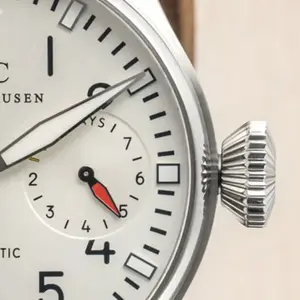
Onion crown: the military legacy of a detail that has become iconic
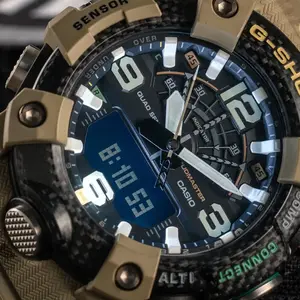
Casio military watch: how the brand became a global benchmark in the armed forces

Watch restoration: precision and technology

Watch winders for automatic watches: useful or superfluous for diving and military watches?
Get ready for the next dive! Receive our latest news and inspiration dedicated to military and dive watches.
Subscribe
Editor: Éric Barse
Journalist, entrepreneur, and founder of the websites www.cafe-racer-only.com and www.scooter-3-roues.com, Eric Barse divides his time between his passions: motorcycles, travel, and watches. A graduate of the Saint-Cyr military academy and the 2nd RPIMA (Parachute Regiment) before pursuing a career in communications and digital media, he has a true passion for authentic watches that have accompanied his two-wheeled adventures for many years, from the Indian Ocean to Africa and Latin America!